Accessibility at the Galleria Doria Pamphilj
What is confirmed
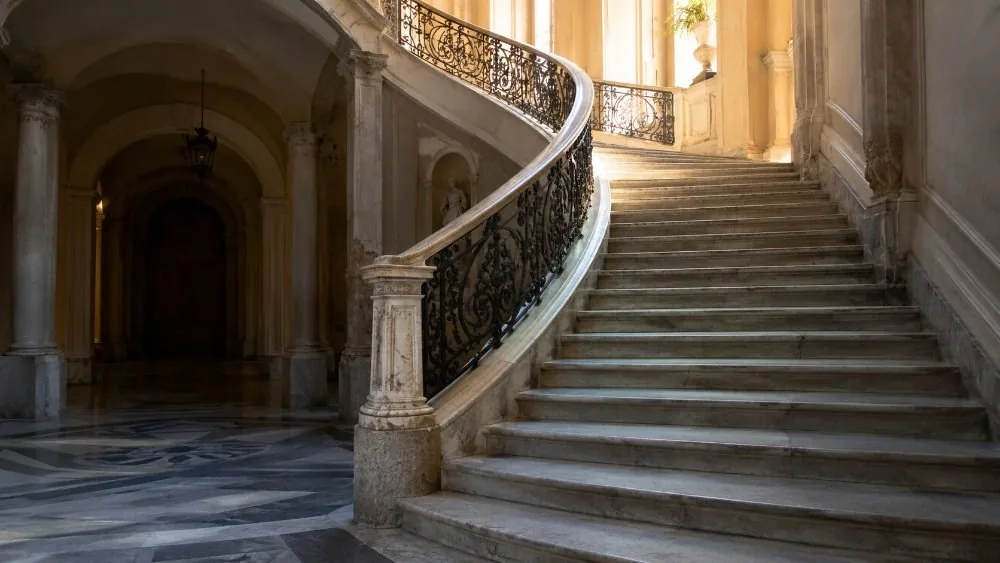
The absence of a lift, which the gallery states plainly. The location of the collection one floor up. And the fact that the guided-visit listing for this gallery states in its own conditions that it is not suitable for wheelchair users, which is worth knowing before you book a guide rather than after — guided tours.
What is not confirmed, and why I will not guess
One third-party page claims a wheelchair-accessible entrance while also saying there are no lifts, ramps or elevators inside, which is not a combination I can pass on to you as guidance. The gallery itself does not publish an access statement. So: no promises here about a step-free route, about the width of doorways, about whether a wheelchair can be borrowed, or about an accessible toilet. Telephone them. This is the single page on this site where a phone call beats anything written down, including this.
If you call, ask three concrete things rather than the general question: how many steps from the street to the gallery floor, whether there is any alternative entrance, and whether the route once you are upstairs has further changes of level. General questions get general answers; those three get useful ones.
Getting to the door
The approach is central Rome, which brings its own problems: uneven sampietrini cobbles, broken kerbs, pavements that are narrow or missing, and illegally parked cars taking what little side space exists. Wheelchair users describe the cobbles as charming and uncomfortable in the same sentence. The smoothest central routes are around the Pantheon, Piazza Navona, Via dei Fori Imperiali, Piazza Santa Maria in Trastevere, St Peter’s Square and Piazza del Popolo, and the Pantheon approach is the 500-metre walk that ends at this door, so that is the way I would come. A taxi can set you down outside: the address is inside the limited-traffic zone, where taxis are allowed and private cars are not — how to get there.
Other things that affect a difficult visit
There is no cloakroom of any kind, so nothing can be left downstairs while you manage the stairs, and large bags and rucksacks are barred outright (details). There is a café in the palace courtyard and there are restrooms. There is no enforced time limit inside, so you can take the route as slowly as you need to, and the gallery’s own suggested 90 minutes is a suggestion and nothing more.
If you decide the stairs are manageable
A reserved entry ticket holds a 30-minute window so you are not standing while you wait for one. 4.7 from 1,910 reviews. Please make the phone call first if access is in question — the ticket is the easy part.
Frequently asked questions
Is the Galleria Doria Pamphilj wheelchair accessible?
I cannot tell you that it is. There is no lift — the gallery states this itself — and the collection is on the first floor. Wheelchair availability, accessible toilets and a step-free route are all unconfirmed. Telephone the gallery on +39 06 6797323 and ask about your specific need before you travel.
Is there a lift to the gallery?
No. Visitors walk up from street level to the piano nobile. This is one of the clearest differences between this palace and the big state museums — the short answer page.
Are guided tours suitable for wheelchair users?
The guided-visit listing states in its own conditions that it is not suitable for wheelchair users. That is the operator’s statement, not mine, and it is the most direct thing anyone in this chain has published about access.
What are the streets around the gallery like?
Uneven cobbles, broken kerbs and narrow pavements, with cars parked where the pavement should be. The smoothest approach is the roughly 500-metre walk from the Pantheon. A taxi may enter the limited-traffic zone and set you down at the door.